
Fifty Shades of Grey or White Sealant
First Published February 23, 2026
Disclaimer: the following contains graphic descriptions of high-quality beads, smooth finishes, and tight seals. Viewer discretion and a sealant gun is advised.
In this article, we’re peeling back the tape on the world of white sealants. We’ll explore why there are so many different shades of white on the market, and offer a little advice about how to pick the best match for your specific job. We’ll also answer the ultimate question: is your white sealant actually just a very light shade of grey?
The “Steamy” Truth About Sealant Joints
Let’s be honest, when you’re staring at a row of sealant tubes in a store somewhere, or scrolling through our online shop, you might think white is always just white, right?
Wrong. Welcome to the world of finishing touches, where your choice of white sealant can be the difference between a perfect job or a lingering eyesore.
Much like that famous “Fifty Shades of Grey” novel, the world of sealants is full of tension, complex relationships between surfaces, and yes – fifty different shades. But we can assure you that they’re all shades of white and not just very, very light greys!

Fifty Shades of Grey by E L James
First published in 2011 this erotic novel was part of a Trilogy. After gaining worldwide popularity the books were made into a series of movies.
Is it White or a Submissive Shade of Grey?
Some of the questions we are often asked are: “Why does my white sealant look grey against my tiles?” or “Why has my white sealant gone yellow”
In the world of colour theory, absolute white is a bit of a myth. Most white sealants always have subtle undertones. And depending on the brand and each products specific formula, your white sealant might be known as:
- Brilliant White: Sometimes called Bright White or Pure White, this is the “Christian Grey” of white sealant finishes. It’s cold, crisp, and offers high-contrast. Sometimes it even comes with a tiny hint of blue to make it look even brighter.
- Ice White: Slightly cooler and looks great sat next to modern, high-gloss white units.
- Off-White / Grey-White / Cream: Shades for those who want something a little more “mature” and less startling.
- Translucent White: The tease. It looks white in the tube but goes on with a slight “misty” see-through quality.
So lets say you decide to put a “Brilliant White” sealant next to an old, slightly yellowed bath. In all likelihood the sealant will stand out with a strong white finish. Conversely, put a matt “Natural White” sealant next to a brand-new porcelain sink, and the finish might suddenly look… well, grey.
How to Precisely Match White or Grey Sealants
Thankfully there are a few reliable ways to predict the final colour shade of a sealant once when its dry. That’s because most good sealant manufacturers either produce colour charts, physical sample boards, and / or work within the RAL colour system.


Use RAL Colours
A RAL colour is any type of sealant that is manufactured to dry in a finish matching the precise standards of the RAL system. So when you choose a sealant colour that has an official RAL colour code, you can be confident that you’ll always get an exact shade, regardless of who has made it, or the products fancy colour name given by the producer.
You can learn more about how the RAL system, in our article linked above. But in short, to find out if a sealant has been manufactured to meet RAL colour standards, look for the RAL numeric code on the packaging and any related documentation.
Some Popular RAL Shades of White and Grey
- RAL 9010 – Pure White
- RAL 9001 – Cream
- RAL 9002 – Grey White
- RAL 7074 – Telegrey 4
Use Colour Samples
Whilst colour charts can be a helpful indicator of how a sealant will look when its dry, the most reliable way to match any colour shade, is to use physical samples.
Considering most sealants change shade during the curing process, and that the final colour shade of some products can be significantly different when dry. Checking samples first can be an essential step, especially for colour critical projects.
What Makes a Sealant White
In the world of sealants, achieving a crisp shade of white isn’t just about aesthetics, it’s also about chemistry. That’s because every sealant needs to be able to withstand things like high humidity and UV exposure, but critically white sealants also need stay white. So how do manufacturers achieve all those things?
First and foremost white colouring is fundamentally achieved through the addition of mineral pigments, with the primary pigment in “pure whites” being Titanium Dioxide (TiO2)
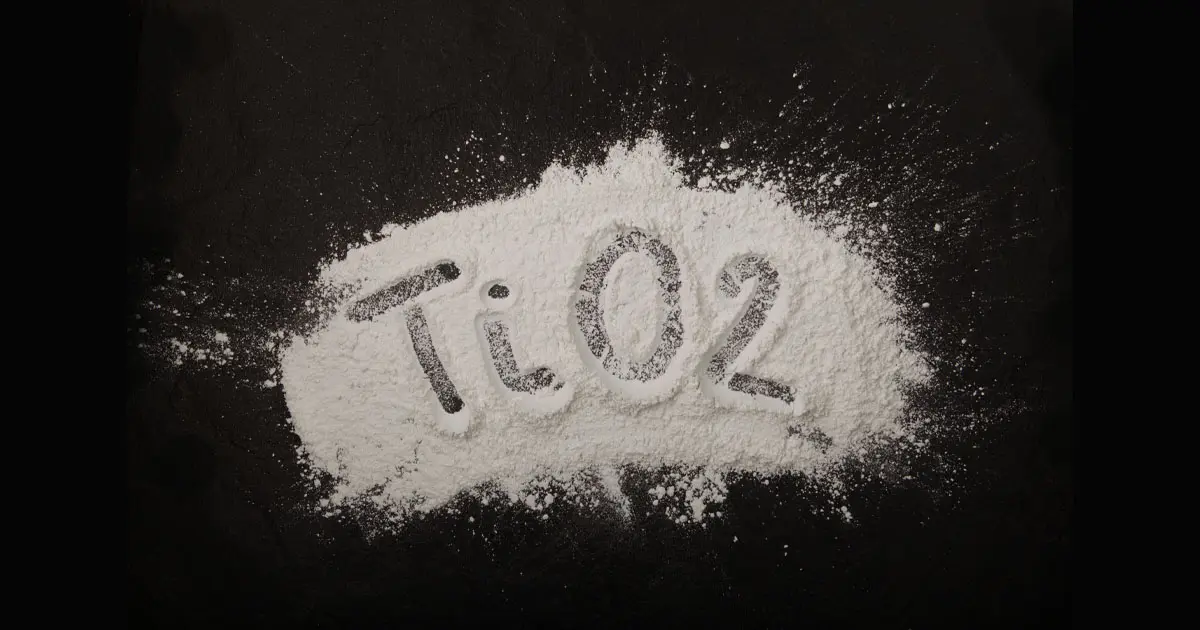
Titanium Dioxide Powder
This widely used white pigment represents about 95% of the world's refined titanium
Titanium Dioxide
Titanium Dioxide is an inorganic compound derived from titanium. It has an incredibly high refractive index, which means it scatters visible light more effectively than almost any other substance. Because of this, when light hits a white sealant that includes this compound, it’s particles bounce light back and our eyes perceive this as a bright white colour.
WhileTiO2 helps to provide a sealants white colouring, other chemicals are also added to stabilise it’s hue and to define it’s overall performance level for a given task.
Fluorescent Whitening Agents
In some high end white sealants, trace amounts of fluorescent whitening agents are sometimes added. These absorb UV light and re-emit it in the blue spectrum, making whites look cooler and brighter to the human eye.
Why the Right Shade Always Matters
Choosing the wrong white sealant isn’t just a minor annoyance; it’s a visual itch that you or your customer will never stop scratching. Here are a few things to consider when choosing a white sealant:

Consider The Ambient Lighting
Even in the most pristine settings, the ambient lighting factor has a big impact on shades of white and grey
The Ambient Lighting Factor:
Under LED lights, cool shades of white look great. But under warm halogen bulbs, they can take on a different appearance. Furthermore long term exposure to UV light can also cause some white sealants to yellow. However, there are several other reasons why yellowing might happen.
The “Yellowing” Affair:
Over time sealants have been known to lose their innocence and turn a nasty shade of yellow. Generally there are four culprits that contribute to this unwelcome change in your perfect shade of white:
- UV radiation from the sun
- Heat
- Chemical reaction to substrate materials
- Contamination after application (while it is still wet)
However, of these four, UV radiation is most likely to be the cause. This due to a process called photo-oxidation which causes the chemical degradation of sealant polymers.
But don’t worry, yellowing does not affect the adhesive strength or the waterproofing properties of a sealant.
With that said there are things that you can do to mitigate the risk of yellowing. When a brilliant white that stays white really matters, and when you’re sealant finish is frequently exposed to outdoor light. We recommend you always choose a sealant that states UV resistant formula. You can also double down on this by looking for one with UV resistance alongside an Acetoxy silicone formulation.
You can learn more about different types of silicone sealant in our guide linked above. But in short Acetoxy cure silicones are best known for their fast curing process, superb adhesion properties, and strong vinegar-like odour when wet.
With all that said, in the context of our discussion here, the most notable characteristic is that they are more resistant to UV light than others and therefore less likely to yellow over time.
The Effect of Lustre
If shade is the personality of your white sealant, then lustre is its attitude. Choosing between matt or gloss isn’t just about colour – it’s about how that sealant plays with the light in your room.
Gloss Finishes: The High-Intensity Show-Off
Gloss is the most popular sealant finish. It wants to be the centre of attention, has a high-shine surface, and reflects a massive amount of light. Because of this gloss finishes often look the “whitest” because they bounce lots of light back at you.
Matt Finishes: The Subtle, Sophisticated Type
Matt finishes are for those who prefer a more understated relationship with their sealant joints. They don’t reflect light; instead they absorb it. And because they don’t bounce light, matt surfaces can often appear a shade or two darker than their gloss counterparts. So, in a dimly lit corner, a matt white sealant can easily be mistaken for a light grey.
Matt sealant finishes are best for hiding imperfections. For example if your bead of sealant isn’t perfectly straight, Matt won’t highlight the wobbles in the same the way that a shiny gloss finish will.
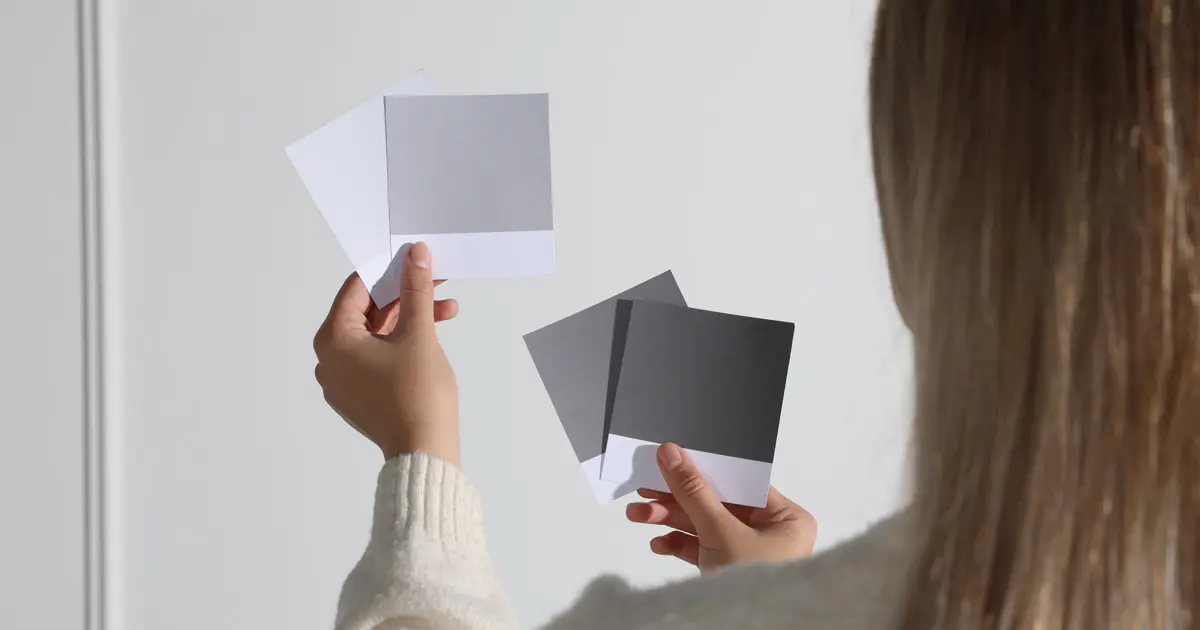
Choosing The Right Shade
To bring a room together seamlessly, take your time and let your eyes find the best results
Bridging the Gap Between Grey and White
In conclusion, whether you are looking for a high-gloss finish or a matte off-white, remember that the “perfect” grey or white sealant is most likely one that almost disappears. It shouldn’t stand out; instead it should tie the room together seamlessly. So take the time to let your eyes find the best results.
Ready to find your perfect match? Don’t settle for close enough. Explore our full range of professional-grade sealants and find the shade that truly satisfies the needs of your project.