Understanding Different Types of Silicone Sealant
First Published February 1, 2021
Last Updated:
Wednesday, February 25, 2026
Choosing the best types of silicone sealant for your project can be an intimidating task. And when it comes to the longevity and effectiveness of your sealing job, making good or bad product decisions can be a critical performance factor.
In this guide, we’ll take a closer look at some of the nuances that differentiate types of silicone sealants. Providing you with the knowledge you need to make an informed choice about which kind of silicone best meets your specific needs.
For a deeper dive into sealant colours checkout our guide linked above. We look at why there are so many different shades of white on the market, offer a little advice about how to pick the best match for your job, and expose the revealing truth about sealant joints.
What is Silicone Sealant
In the context of a sealant, Silicone is simply a type of adhesive, which is also sometimes referred to by using generic terms like caulk or mastic. Most often different types of silicone sealant are used to create a watertight or airtight seal at the joint between two surfaces. This will normally be in locations that require the creation of a durable yet adequately elastic joint, in order to keep out unwanted air or moisture.

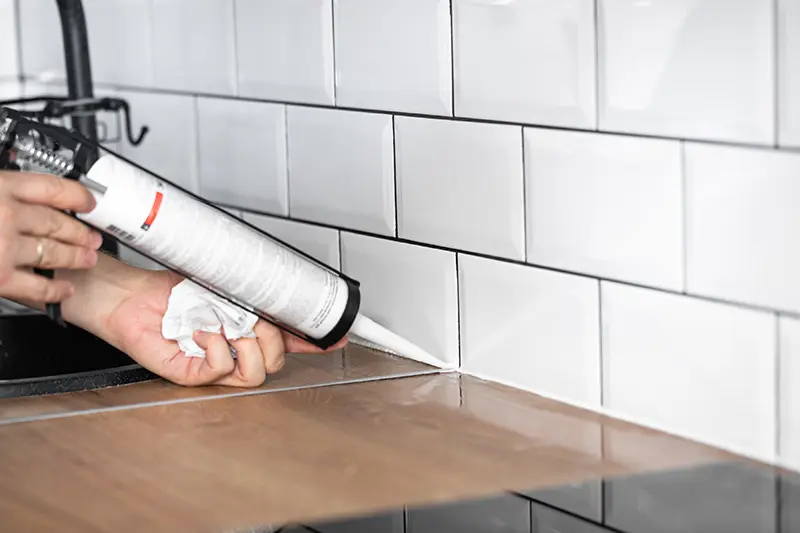
Making a Smooth Silicone Sealant Bead
Create flexible and watertight joints between two surfaces using a silicone sealant
Silicone sealants are often chosen over other kinds of sealant because of their improved flexibility and durability. Once dry (cured), they create really tough elastic bonds which hold their shape extremely well. While remaining relatively un-reactive to both high and low temperatures.
Silicone sealants typically have a tacky paste consistency when being applied. Then, after being given time to dry, the paste cures to become a rubber-like material which is elastic.
About Silicone Sealant Elasticity
The flexibility and elastic properties of different types of silicone sealant are summarized by the term modulus. Put simply, modulus measures the amount of force, load, or stress that’s required to deform and stretch a sealant to a specific degree.
Formulations of Silicone sealants are available in many different types, each with varying levels of stiffness or flexibility (modulus). However for general construction and DIY applications, in terms of elasticity, they tend to be classified as being either low, medium or high modulus.
Lower Modulus Silicone Sealants
Generally, low-modulus silicone sealants offer greater movement capabilities than their counterparts. They are much more flexible than high modulus sealants and can deform more easily. So they are often used in locations that experience lots of joint movement.
Higher Modulus Silicone Sealant
High-modulus silicone sealants offer greater durability in joints where lower amounts of movement is expected. They require much more force to deform and are often strong enough to perform as a structural component in some applications. Sealants with a higher modulus tend to have good anti-aging properties and are better at withstanding repeated cleaning.
Silicone Sealant Hardness
Put simply, what you need your silicone sealant to achieve will determine how hard it should be. You’ll certainly need it to be hard enough to protect against abrasion, but soft enough to provide ample flexibility and vibration resistance.
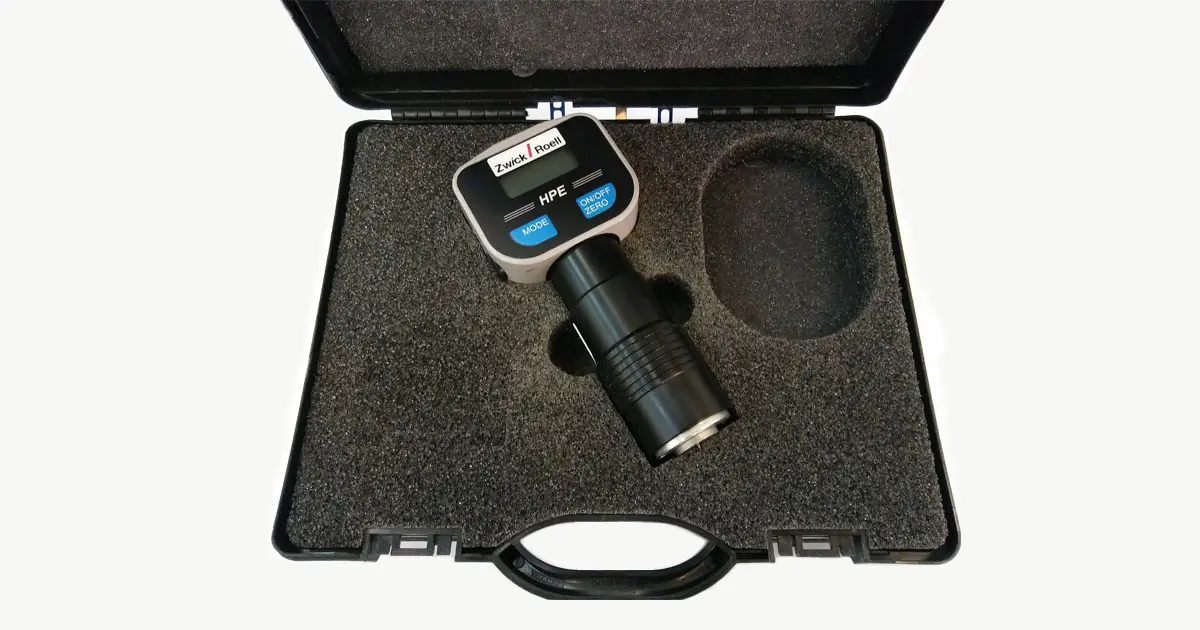
Digital Shore Hardness Tester
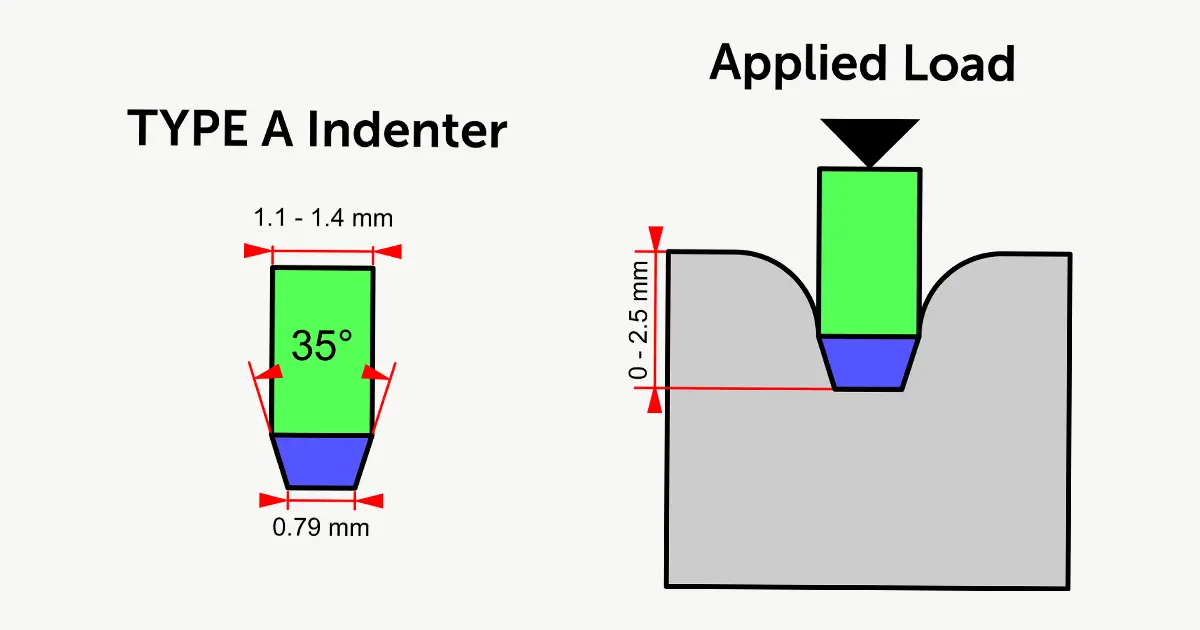
Diagram of a Shore A Durometer Indenter
As you might expect, higher modulus sealants are harder, which means they’re much more resistant to damage. However, as hardness increases joint flexibility decreases. So another way of gauging an individual sealants elasticity in conjunction with its durability, is by checking where it appears on the numeric Shore A Harness scale.
Measuring Shore A Hardness
The hardness of most materials can be measured using a shore durometer, which gives a scale reading. Higher numbers on the scale indicate a greater resistance to indentation and lower numbers indicate less resistance, which means they are much softer materials. For example a rubber band might typically have a durometer reading of 25 and a car tyre around 70. In the world of silicone sealants, depending on the product, they generally range between 10 and 60.
How Does Silicone Sealant Dry?
Silicone sealant becomes touch dry fairly quickly after it has come into contact with ambient humidity. But that doesn’t mean it’s ready to be inundated with water or exposed to the elements. This is because it only becomes waterproof once it has completely cured.
Depending on the product and its location, curing can take anywhere from a few hours to multiple days. So we recommend that you always check manufacturers guidelines, so that you can plan around this before getting started.
The process comprises of chemical changes that begin once the silicone is exposed to oxygen. Warmer temperatures generally lead to faster curing times, but it’s not a good idea to try helping silicone to cure faster by applying direct heat to it.
It may seem counterintuitive, but silicone sealant curing times are accelerated by increased humidity. So if you need to reduce the curing time, you could try using a humidifier.
Types of Silicone Sealant
In the mainstream market place, different kinds of sealants are mostly classified for sale by their intended use.
Naturally this helps people narrow down searches for suitable products, because things like frame sealants and bathroom sealants can be easily identified. However in terms of performance, classifications based just on intended use, rarely provide users with the full picture.
For these reasons it’s useful to know that thoroughbred silicone sealants can also be defined by their curing method. These, more technical types of classification, are helpful when it comes to understanding the compatibility of silicone sealants with different kinds of substrate material.
There are many different curing methods for silicone sealants. So you should always check the manufacturer’s instructions and recommendations before use. But let’s take a look at the most common types of curing methods used by silicone sealants and when you should consider use them.
Acetoxy Cure Silicone
Acetoxy cure silicones are best known for their fast curing process, superb adhesion properties, and strong vinegar-like odour when wet. That’s because these widely used silicones use acetic acid as the curing agent.
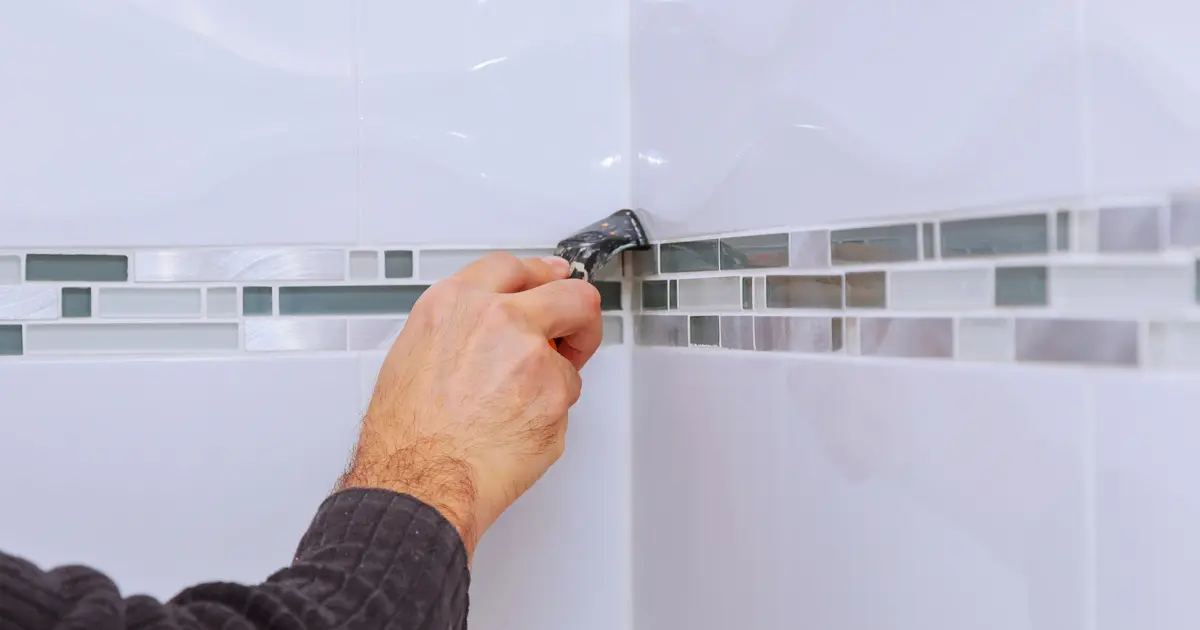
Sealing The Seam Between Ceramic Tiles
Acetoxy cure silicones are great for sealing joints in bathrooms. And when white is the chosen colour, they tend to stay white for longer.
Once exposed to the moisture in the air, acetoxy cure sealants undergo a chemical reaction, which releases acetic acid as a by-product. As a result they give off a strong smell until dry.
Characteristics of Acetoxy Silicone
- Rapid Drying Time: Acetoxy cure sealants typically cure quickly. Depending on factors such as temperature, humidity, and thickness, this is often within 24 hours.
- Strong Adhesion: They stick well to a wide range of surfaces, including things like glass, ceramics, and non-porous materials. This makes them suitable for jobs where a strong, long-lasting bond is required.
- Strong Odour: During the curing process, acetoxy cure sealants release acetic acid, resulting in a distinct vinegar-like odour. Therefore good ventilation is recommended when working with this type of sealant.
- Corrosion Risk: It’s important to note that acetoxy silicone sealants might not work well with some materials, like certain plastics and sensitive electronic components. This is because the acetic acid can sometimes react with these materials, causing damage like corrosion.
When to Use Acetoxy Silicone
- Kitchens and Bathrooms: Acetoxy cure silicones are great for sealing joints and in kitchens and bathrooms, including around baths, shower enclosures, countertops, and back-splashes. However for these types of sanitary jobs, we recommend choosing one which includes a fungicide, to help prevent mould growth.
- Glass Installations: Thanks to its quick curing time and strong adhesion to glass surfaces, Acetoxy silicone is also a popular choice for sealing glass panels and windows.
- Projects with Short Turnaround Times: When a quick and trustworthy seal is required, an acetoxy silicone is a good choice because of its rapid curing process.
- Projects with Budget Constraints: Actoxy silicone sealants are often less expensive than some other types of silicone sealants. Coupled with their speedy curing time, this makes them a good cost effective choice for certain jobs.
Neutral Cure Silicone
Neutral cure silicone sealants are known for their versatility and compatibility with a broad range of materials.
Unlike acetoxy cure silicones, neutral cure sealants don’t produce acidic by-products. Instead they employ alternative curing systems like oxime or alcoxy. The oxime system releases Methylethyl ketone oxime and alcohol is released from alcoxy curing products, both of which are non corrosive.
Characteristics of Neutral Cure Silicone
- Minimal Odour: Neutral cure silicone sealants produce little to no noticeable odour during their curing process. This can be particularly advantageous in enclosed or sensitive environments
- Non-corrosive: This is one of the key features of neutral cure silicones. This means they won’t damage metals or other sensitive materials over time. So they’re an ideal choice for use in areas where metals are present.
- Good Weather Resistance: Neutral silicones offer excellent resistance to weathering from things like UV radiation, temperature fluctuations, and the elements. This makes them particlluy suitable for use in outdoor and indoor locations.
- Longer Cure Time: Neutral cure silicones typically need longer to cure compared to acetoxy sealants. Depending on the environment, they may take up to 48 hours or more to fully dry.
- Longer Shelf Life: Another advantage is that a neutral curing silicone tends to have a longer shelf life than other types of silicone. Which means you can keep it your toolkit for longer, without worrying about it going off.
When to Use Neutral Silicone
- On Certain Metals: For sealing applications on specific types of metals, like aluminium, copper, stainless steel, bronze and galvanised steel. Especially those which are prone to corrosion or sensitivity to acidic substances.
- Around Sensitive Electronics: Neutral cure silicones are ideal for sealing around electronic components and circuit boards. As well as other equipment where exposure to acidic by-products could potentially cause damage.
- Sealing Natural Stone: When working with natural stone materials like granite, marble or travertine. Using a neutral cure silicone helps avoid potential discolouration from chemical reactions that occur with other types of silicone.
- Specialist Kitchen Bathroom Installations: Neutral cure silicone is generally unaffected by exposure to moisture during the curing process. This key advantage makes it an ideal choice for use in areas where moisture is always present. Especially when sensitive components are being installed such as high-end kitchens and bathrooms.
Choosing The Best Silicone Sealant
Choosing the best silicone sealant is all about selecting one which meets your performance objectives.
What is The Best Silicone Sealant?
The truth is, no single silicone sealant works perfectly for every sealing situation, each has its own strengths and weaknesses. Nevertheless the secret to choosing the best sealant is all about selecting one which meets your performance objectives. It’s all about selecting one that offers the best possible balance between strength, elasticity and curing method.
So now that you’re equipped with some facts about the different types of silicone sealants. You should be able to make an informed decision about what’s best for your job. However, if you’re still in-doubt, opting for a medium modulus, neutral cure silicone can be a wise choice.