
How to Use Expanding Glue
Last Updated:
Wednesday, March 26, 2025
The special expansion characteristics of polyurethane glues can sometimes make working with this type of adhesive appear a little daunting, so let’s take a quick look at how to use expanding glue correctly.
Polyurethane (PU) glues have a few properties which make them unique when compared to other types of glue. These include a foaming action which makes them expand during the drying process. This is why they’re best known as expanding glues.
Key Benefits of Expanding Wood Glues
- High material compatibility: Can adhere to most smooth substances like metal and glass.
- Fast setting: Short open working times mean you can work quickly to assemble your project once you’ve applied it.
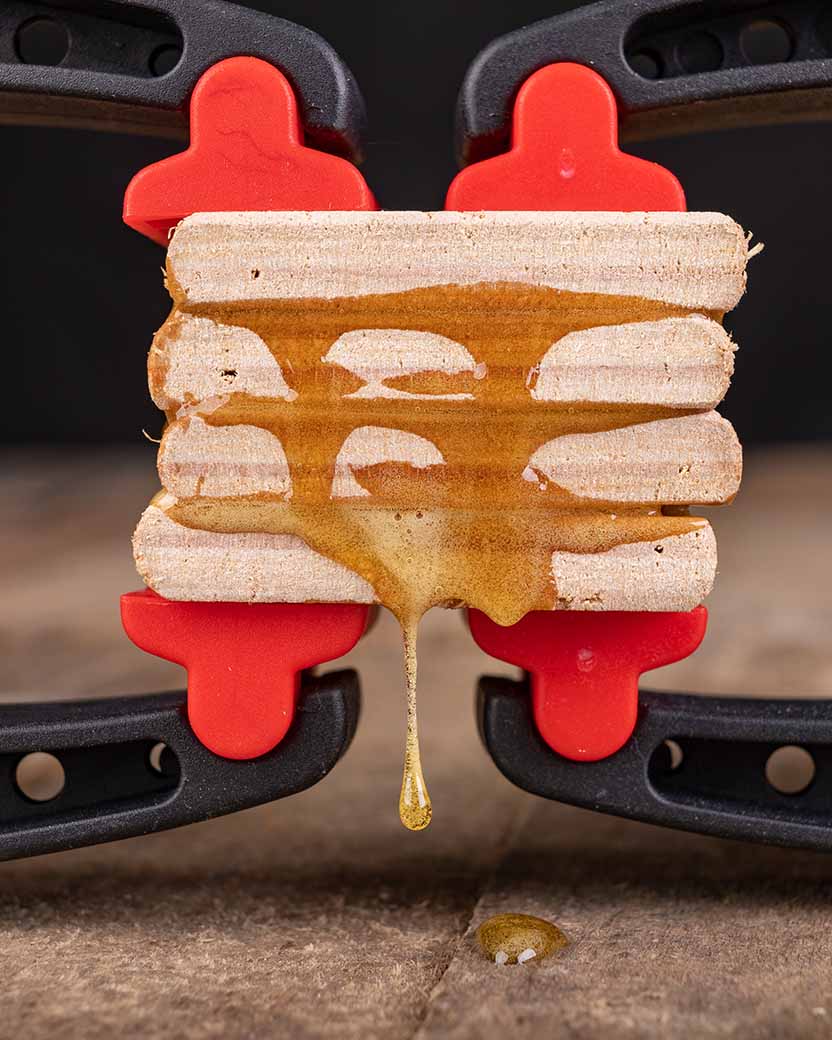
- Expansion: Foams and expands while curing, which helps fill uneven gaps in joints.
- Low moisture content: Less likely to make wood fibres swell.
- High bond strength: Stronger than PVA glue and great for end grain joints.
- Waterproof: This type of glue can be used in wet environments with zero loss of strength.
- Great temperature resistance: Bonds remain undamaged when exposed to extreme temperatures for prolonged periods of time.
Golden Rules for Using Expanding Glue
When you use an expanding glue you should avoid contact with skin. So always wear safety gloves, this is because polyurathene glues will stain skin and ruin clothes. Most good brands normally include a set of disposible gloves. Then, once you’re prepared, simply follow the three golden rules below to get the best results:
1. Dampen Surfaces
Expanding glues are activated by moisture. So lightly dampen both surfaces of the items to be bonded with water. However do not saturate the surface and do not add water to the glue bottle.
2. Glue Together
Spread a thin layer of glue on to either surface. Try not to over-apply glue because while curing, it will expand 3-4 times in size. So apply your glue sparingly and remember about expansion.
3. Clamp Together
Next its important to grip the items together for about 1-2 hours. Ideally we recommend that you use clamps for this, but you could also use heavy weights or strong removable tape to achieve sufficient gripping pressure. Just bear in mind that the quality of the bond will improve with better clamping.
Final Thoughts
In conclusion using an expanding glue should not be considered difficult, especially when you take time to prepare. Thanks to their expansion charateristics they’re an ideal choice for bonding dissimilar joints and wood with end grain. This is because, unlike other types of glue, PU glues can expand to penetrate fibres and create much stronger bonds.
To learn more about the characteristics of different glues and how to choose the best glue for wood, check out our helpful feature guide. Furthermore we’d love to here about your own experiences using polyurathene glues, so please leave a comment in the discussion section below.